Website Authority: Is it a Google score? Is it all about backlinks? Does a higher number automatically mean more traffic?
If you’ve spent any time learning SEO, you’ve probably come across the term website authority, and at first, it sounds a bit vague, so in todays blog I am going to get a little more specific.
The truth is, website authority is useful, but a lot of people misunderstand it.
So in this guide, you’ll learn what website authority actually means, what affects it, what does not affect it, and the practical steps you can take to build more of it over time.
Because yes, you can improve it.
What Is Website Authority?
b Website authority is basically the strength and trust level of your website in the eyes of SEO tools and, indirectly, search engines.
Now, here’s the important part…
“Website authority” is not one official Google score. Google uses many ranking systems and signals, and third-party SEO tools create their own authority-style metrics to estimate how strong a site is.
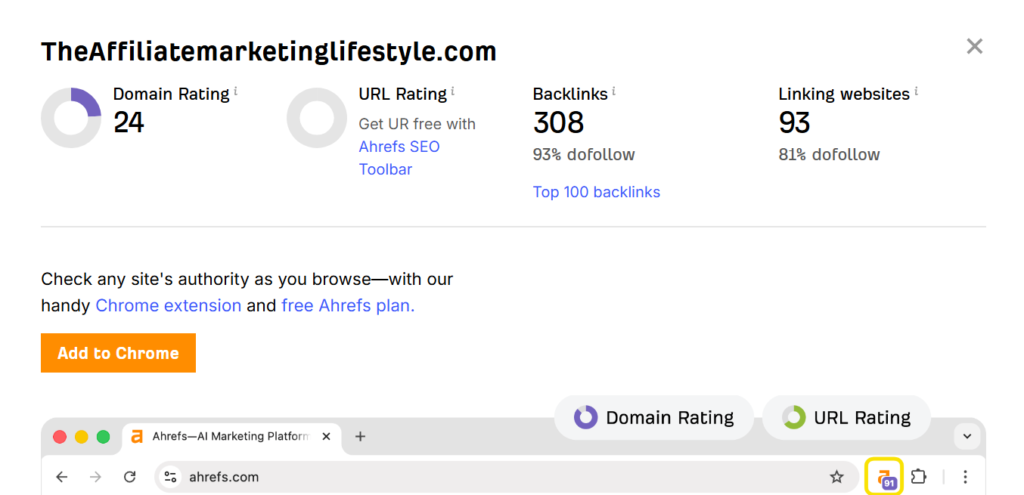
For example, Ahrefs uses Domain Rating (DR) to measure the strength of a site’s backlink profile on a 0–100 scale.
So when people talk about website authority, they’re usually talking about one of two things:
- The overall strength of a domain is based on links, trust, and reputation
- A third-party SEO metric that tries to estimate that strength
In simple terms, a website with stronger authority usually has:
- Better backlinks
- More trust signals
- Stronger content
- More consistent topical relevance
- A better chance of ranking competitively
Note: That does not mean a low-authority site can’t rank… I have proven this on multiple occasions with my own blogs on new websites.
Pro Fact: Smaller websites rank all the time when they target the right keywords and publish genuinely helpful content.
Why Website Authority Matters
Website authority matters because it can make SEO easier.
Not easy.
Just easier.
When your site has more authority, your content often has a better chance of getting indexed, trusted, and ranked against competing pages.
Google also explains that links and page experience are among the things that can affect how pages perform in Search, although great rankings are never guaranteed by any single factor.
Website Authority Example:
If two pages are both decent, the one on the stronger, more trusted website often has the edge.
That’s why authority becomes so important once you start going after more competitive topics.
Pro Note: A brand-new website might still rank for very specific long-tail keywords. But if you’re trying to outrank established sites in a crowded niche, authority becomes a bigger part of the game.
Website Authority Vs Google Rankings
This is where many bloggers get tripped up.
They check a DR score or another SEO metric and assume that number is the one Google uses.
Well…It isn’t.
Google does not hand your website a public “website authority” score that you can monitor inside Google Search Console. Third-party tools estimate authority in their own ways, primarily by analyzing backlink data.
That means:
- A high authority score does not guarantee rankings
- A low authority score does not mean your site is doomed
- Authority is a useful benchmark, not the whole SEO picture
This is why you should use website authority as a directional metric, not a final verdict on your site.
It helps you understand where you stand.
But it should never be the only thing you focus on.
What Builds Website Authority
If you want more website authority, you need to understand what actually contributes to it.
The main drivers of website authority
1. Quality Backlinks
This is the big one.
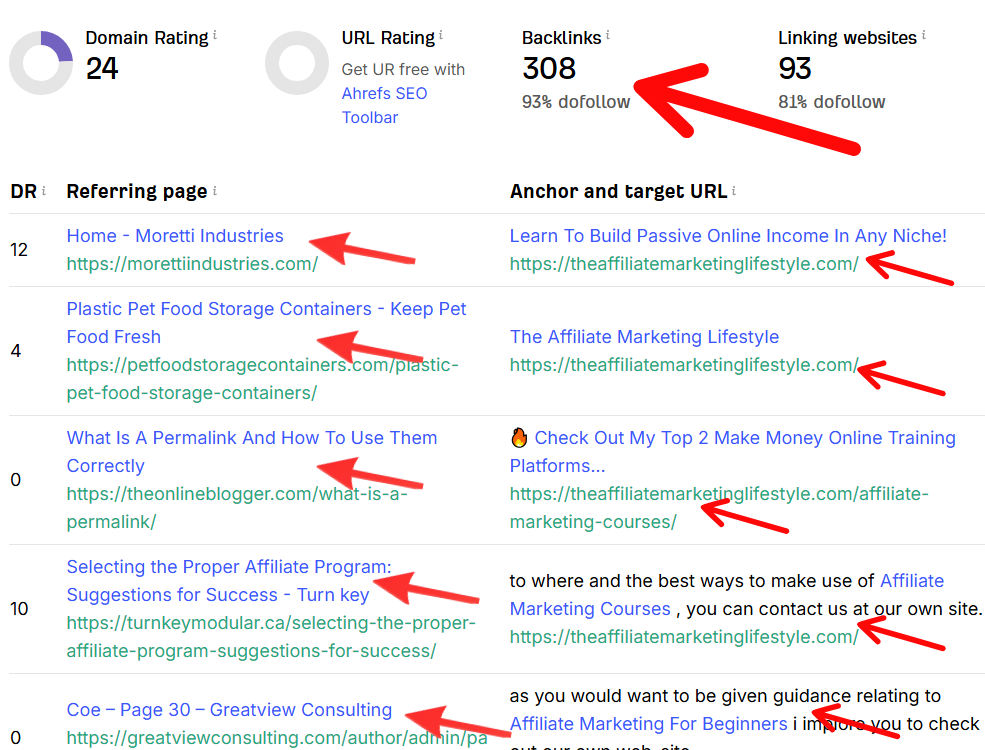
Backlinks from relevant, trustworthy websites are among the strongest signals of authority in metrics. Ahrefs states that its Domain Rating is based on the quantity and quality of external backlinks pointing to a website.
Pro Note: But not all backlinks are equal.
A single link from a respected site in your niche can be more valuable than dozens of random links from weak or unrelated sites.
Types of backlinks you need:
- Relevant links
- Editorial links
- Natural links
- Links from real websites with real traffic
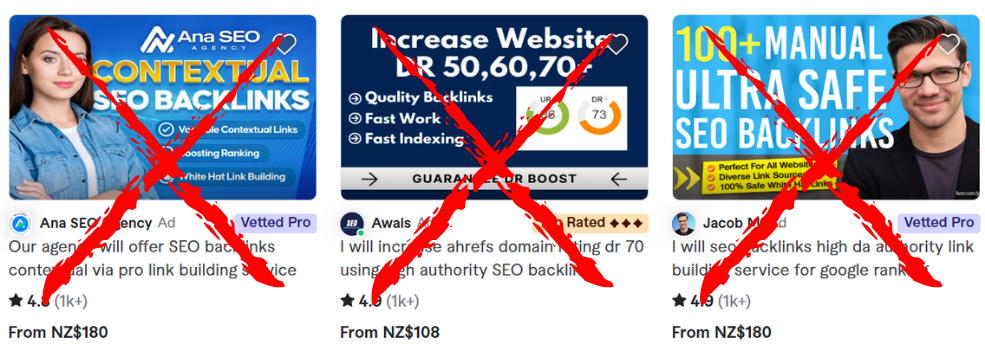
What you do not want is a pile of spammy links you bought from some sketchy service promising “500 backlinks overnight.”
That kind of stuff can create more problems than progress.
2. Topical Relevance
A website that consistently publishes around one clear topic tends to build stronger relevance over time.
For example, if your blog is all about blogging, SEO, content creation, and affiliate marketing, then your authority in that space can grow faster than a site that randomly posts about gardening, crypto, dog food, and celebrity gossip all at once.
Topical consistency helps search engines and users understand what your site is actually about.
Clarity matters.
3. Helpful Content
Authority is not built by links alone.
If people land on your site and your content is weak, thin, outdated, or unhelpful, that authority won’t go very far.
Helpful content tends to attract:
- More shares
- More natural backlinks
- Better engagement
- More return visitors
- Stronger brand trust
In other words, content is often what earns the authority in the first place.
4. Internal Linking
This one gets overlooked a lot.
Internal linking helps distribute value around your site and makes it easier for search engines to understand your content structure.
If you create an excellent article and never link to your other related posts, you’re wasting an opportunity.
A smart internal linking setup can help weaker pages gain visibility and strengthen your overall site structure.
5. Trust and User Experience
Google has made it clear that page experience, usability, and helpfulness matter, even though they are not a magic ranking button on their own. Elements such as HTTPS, fast load times, mobile usability, and non-intrusive design all contribute to a better experience.
If your website looks outdated, loads slowly, or is stuffed with ads, it can hurt the overall impression people get from your brand.
And trust is a huge part of authority.
What Does Not Increase Website Authority
Many site owners waste time on tactics that sound smart but don’t move the needle.
Things that usually don’t help much:
- Publishing loads of low-quality articles
- Buying cheap backlinks in bulk
- Stuffing keywords everywhere
- Chasing vanity metrics
- Copying what big sites do without a strategy
- Creating content outside your niche just for traffic
Note: More content does not automatically mean more website authority.
Note: More backlinks do not automatically mean more website authority either.
Quality over quantity.
How To Get More Website Authority
Now let’s get into the part you actually care about.
How to build website authority in a way that is simple to do and easy to understand.
1: Create Content Worth Linking To For Better Website Authority
If your content is average, people won’t link to it.
It’s that simple.
You need pages that deserve attention.
These are often:
- In-depth guides
- Original tutorials
- Case studies
- Statistics roundups
- Useful tools or templates
- Strong opinion pieces backed by experience
Ask yourself this:
Would someone naturally reference this page in their own article?
If the answer is no, improve the content before you worry about link building.
A weak page with outreach behind it is still a weak page.
2: Build Backlinks The Right Way To Increase Website Authority
Backlinks still matter, but the approach matters even more.
Here are some realistic ways to earn them:
- Write guest posts on relevant websites
- Create linkable assets people genuinely want to reference
- Reach out to bloggers who already cover similar topics
- Replace broken links with your relevant content
- Build relationships in your niche over time
Tip: Don’t just ask for links.
Create something useful enough that asking feels natural.
Pro Advice: Avoid buying links that are meant to manipulate rankings. Google has long warned that buying or selling links that pass ranking value violates its guidelines.
Improve Website Authority By Covering One Topic Deeply
This is one of the smartest things you can do.
Instead of writing one article on a topic and moving on, build clusters.
For example, if your niche is blogging, you could create content around:
- Keyword research
- On-page SEO
- Affiliate marketing
- Internal linking
- Website speed
- Email list building
- Blog monetization
When you publish multiple strong articles around related subtopics, your site starts to feel more complete and more trustworthy.
That helps both users and search engines.
It also gives you far more internal linking opportunities.
Strengthen Your Internal Links
Internal links are easy wins.
Every time you publish a new post, look for older posts where that new article makes sense as a natural link.
And do the reverse too.
Go into the new article and link back to important supporting content.
A few good internal linking habits:
- Use descriptive anchor text
- Link to relevant pages only
- Prioritize important money pages and cornerstone posts
- Keep your site structure clean and logical
You don’t need to overcomplicate it, Just help readers discover the next useful page.
Update Old Content Regularly
Old content can quietly drag your site down.
If you have outdated, thin, or no longer useful articles, refresh them.
Add new examples. Improve the formatting. Fix broken links. Expand weak sections. Tighten the intro. Make it better.
This can help you:
- Improve rankings
- Increase engagement
- Keep content competitive
- Make your site feel more trustworthy
Sometimes, building more website authority is not about creating more content.
Sometimes it’s about making your current content stronger.
Be Patient With Website Authority Growth
This part is not exciting, but it’s real.
Website authority usually grows slowly.
Especially if your website is new.
You’re building trust, relevance, and link equity over time. That rarely happens in a few weeks.
A lot of bloggers quit too early because they expect instant results. SEO authority is usually a compounding game.
The content you publish today, the internal links you add this month, and the backlinks you earn this year can all stack up over time.
How To Check Website Authority
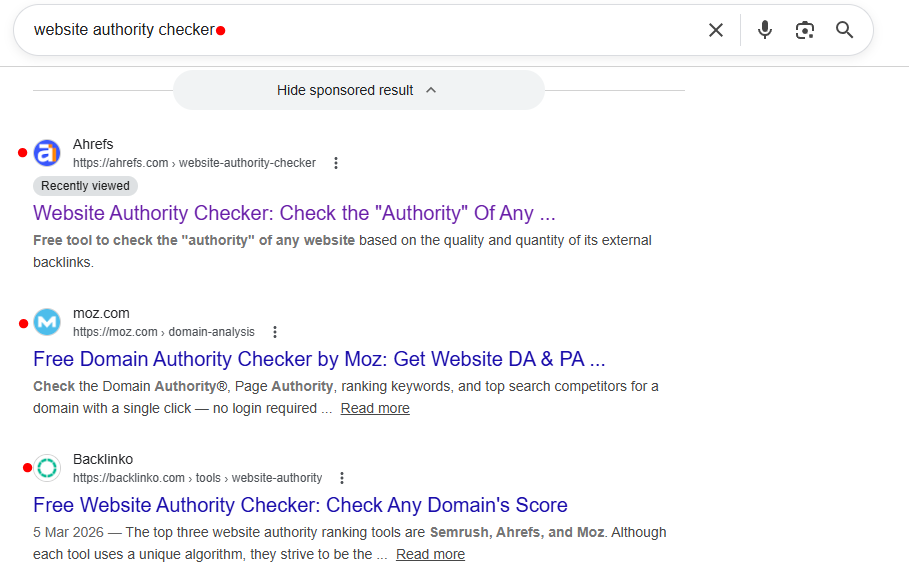
You can check website authority using third-party SEO tools.
Different tools use different names, such as:
- Domain Rating (Ahrefs)
- Domain Authority (Moz)
- Authority Score (Semrush)
Just remember that each tool calculates things differently.
So don’t obsess over the exact number.
Use it as a rough indicator.
A trend is more useful than a single snapshot.
If your content quality is improving, your backlink profile is getting stronger, and your site is becoming more focused, then you’re probably moving in the right direction.
Final Thoughts On Website Authority
Website authority is one of those SEO concepts that can sound more complicated than it really is.
But overall, it’s about trust, strength, relevance, and reputation.
You build it by publishing useful content, earning good backlinks, staying focused on your niche, and improving your website over time.
Not by gaming the system.
Not by chasing shortcuts.
And not by staring at a score every day, hoping it jumps.
Focus on becoming the kind of website people actually want to visit, trust, and reference.
Do that consistently, and your website authority will usually follow.