

To use affiliate links correctly, you need to place them naturally, disclose them clearly, recommend products honestly, and make sure they actually help your readers.
When I first started my blogging journey online, my first website was full of affiliate links, and guess what… I made very few sales… however, once I learned how to use affiliate links effectively on blog sites, leads, conversions, and sales became easier and more frequent.
If your blog feels spammy, people won’t trust you… And if people don’t trust you, they won’t click your links, buy through your recommendations, or come back to your website.
In this guide, I’ll show you exactly how to use affiliate links the right way so you, too, can make easier, more consistent sales.
How To Effectively Use Affiliate Links In Blog Posts Naturally
The best way to use affiliate links is to place them where they make sense.
- Don’t force them into every paragraph.
- Don’t link random words just because you want more clicks.
Instead, add affiliate links when they support the point you’re making.
For example, if you’re writing a blog post about starting a website, it makes sense to link to:
- Your recommended hosting provider
- A WordPress theme you use
- An email marketing tool
- A keyword research tool
But it would not make sense to suddenly promote a fitness product in the middle of that post.
Relevance matters.
Pro Tip: Only add an affiliate link if it genuinely helps the reader take the next step.
Why You Need To Use Affiliate Links Properly

Affiliate links can be powerful, but they can also hurt your blog if you use them incorrectly.
When done correctly, affiliate links can:
- Help your readers find useful products
- Build trust with your audience
- Create passive income over time
- Improve your blog’s monetization
- Support helpful content creation
When done poorly, they can make your blog look desperate.
Nobody wants to read a blog post that feels like one giant sales pitch… Remember your main job as a blogger is to help the reader first.
The affiliate commission comes second… This mindset is what separates a trusted blog from a spammy one.
Where To Use Affiliate Links On Your Blog
There are several smart places to use affiliate links on blog sites… and no, we do not just add them willy-nilly.
Best places to use affiliate links:
Product review posts
These are perfect because the whole article is focused on one product or service. If the product is recommendable, you can use an affiliate link so the user can purchase.
2. Comparison posts
For example, “Tool A vs Tool B” or “Best Email Marketing Platforms For Beginners.” The idea here is to give the best option for the user by comparing programs or tools.
3. Tutorial posts
If you’re showing readers how to do something, you can recommend the tools needed and include affiliate links to the tools you recommend.
4. Resource pages
A “tools I recommend” page can work really well if your audience trusts you.
5. Blog post introductions and conclusions
You can mention a helpful product early or remind readers about it near the end.
6. Email newsletters
Affiliate links can also work in emails, as long as they follow the program’s rules. The key is to use them with purpose. Don’t just add them everywhere.
Use Affiliate Links With Clear Disclosure
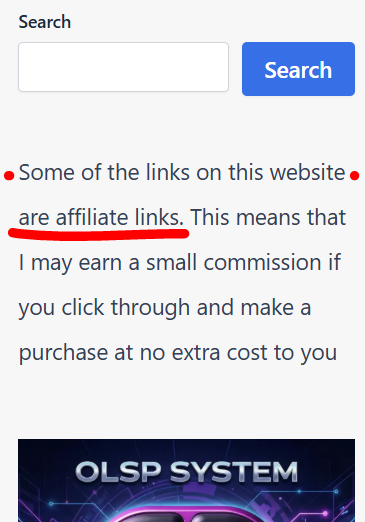
This part is important and often overlooked.
You should always disclose when your blog post contains affiliate links.
An example of a simple disclosure:
“Some links in this post may be affiliate links. If you click and make a purchase, I may earn a small commission at no extra cost to you.”
Place your disclosure near the top of your blog post before the first affiliate link appears.
This helps you stay transparent with your readers, and honestly, most people don’t mind affiliate links when you’re upfront about them.
In fact, being honest will build more trust.
Pro Tip: I have my disclosure notice in my sidebar; this way it is on every blog page I write. It is also a must to have an Affiliate Disclosure Page on your website as well.
How Not To Use Affiliate Links
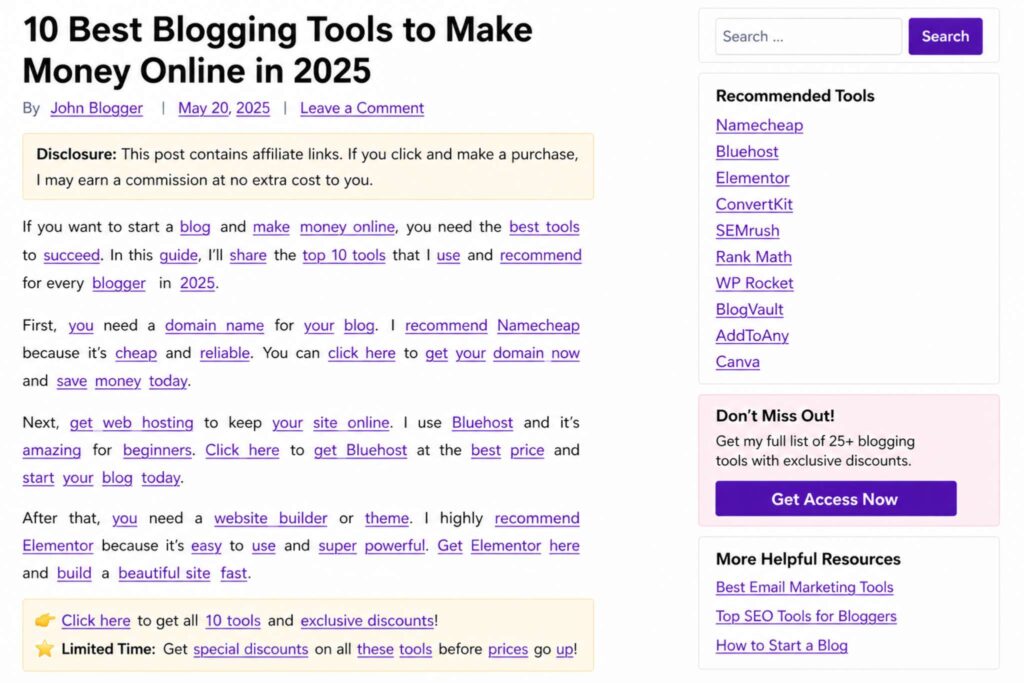
Now let’s talk about what not to do, because this is where many new bloggers go wrong.
Avoid these mistakes:
- Adding too many affiliate links
- Promoting products you’ve never researched
- Hiding the fact you may earn a commission
- Linking to poor-quality products
- Making exaggerated claims
- Stuffing links into every section
- Choosing commissions over reader value
Your blog is a long-term asset… don’t damage it for a quick commission.
When you use affiliate links, think about the reader’s experience first.
- Would you recommend this product to a friend?
- Would you use it yourself?
- Does it actually solve the problem your reader has?
If the answer is no, don’t promote it.
Why We Use Affiliate Links In Helpful Content
There is no doubt in my mind that the best affiliate content is useful content.
Instead of writing, “Buy this now because it’s amazing,” explain why the product helps.
Show the reader:
- What the product does
- Who it is best for
- Who it is not for
- What problem it solves
- Any downsides they should know
- How it compares to other options
This makes your content more balanced and trustworthy.
For example, instead of saying:
“This is the best blogging tool ever.”
Say:
“This tool is a good option for beginner bloggers because it helps you find keywords, plan content, and track rankings. However, it may be too expensive if you’re just starting with a small budget.”
That sounds much more honest.
And honesty sells better than hype.
How Many Affiliate Links Should You Use?
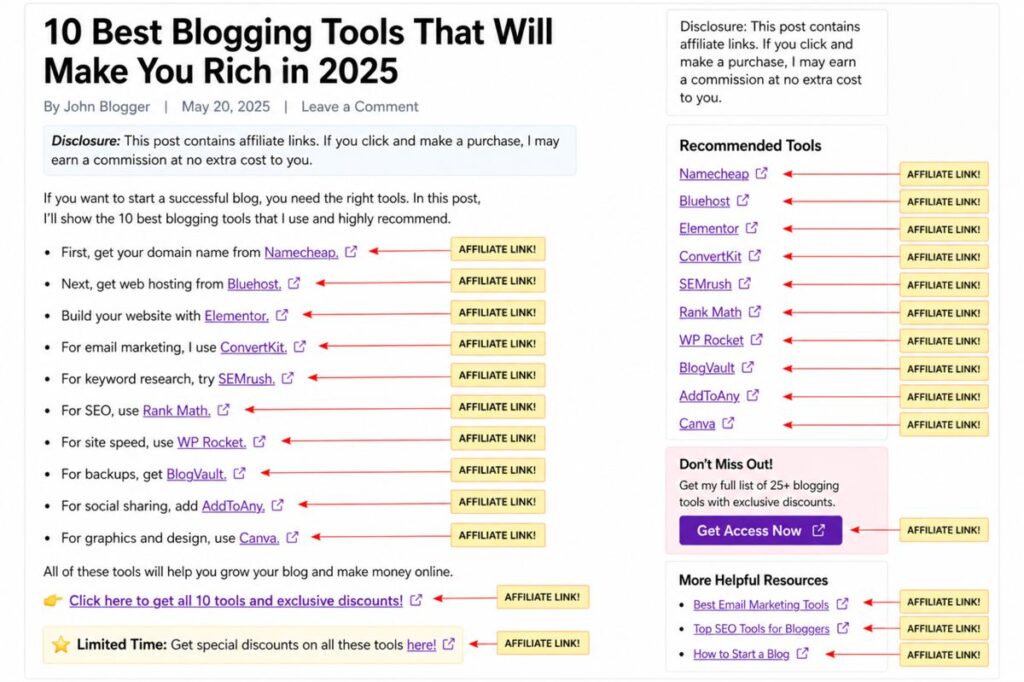
In all honesty… There is no perfect number.
It all depends on the blog post type, the length, and the goal you have in mind.
A short article may only include 1 or 2 affiliate links, whereas a long comparison post might naturally include 5 or more.
Don’t add links just to hit a number; focus on flow, and if the link helps the reader, add it. If it feels forced, leave it out.
Also, avoid linking the same affiliate product too many times in a row. It can make your content feel pushy.
A better approach is to place links at natural decision points, such as:
- After explaining a benefit
- Inside a product recommendation
- Near a call to action
- In a comparison table
- At the end of a tutorial
Use Affiliate Links With Strong Calls To Action
A call to action tells the reader what to do next.
This can improve your clicks without sounding pushy.
Examples include:
- “Check the latest price here.”
- “Try the tool here.”
- “Read my full review here.”
- “Start your free trial here.”
- “See if this is right for you.”
Keep it simple.
You don’t need to pressure people… Just guide them.
Your reader is already looking for help. A clear call to action makes the next step easier.
Use Affiliate Links Only For Relevant Products
Relevance is everything.
If your blog is about blogging, SEO, and online business, your affiliate links should match that niche.
Relevant affiliate products might include:
- Hosting platforms
- SEO tools like AIOSEO
- Writing tools
- Email software
- Website themes
- Online business training
- Productivity tools
When your links match your content, they feel natural. When they don’t, they feel random, and random links don’t convert well.
My Final Thoughts On How To Use Affiliate Links Correctly
Learning how to use affiliate links correctly is one of the most important skills for monetizing a blog.
The goal is not to trick people into clicking.
The goal is to help your readers make better decisions.
When you recommend products honestly, disclose your links clearly, and place them naturally inside helpful content, affiliate marketing becomes much more effective.
So remember:
Help first.
Sell second.
Trust always comes before commission.
That’s how you build a blog that earns income without annoying your readers.