
If you’ve ever poured your heart into writing a blog post, only to watch it drift into the void with no engagement, you know the frustration. That’s where solid copywriting tips come in.
Think of copywriting as the art of writing not just to inform, but to connect, engage, and persuade.
For bloggers, mastering copywriting can be the difference between a post that echoes in cyberspace and one that builds trust, drives action, or inspires others.
In this post, I’m breaking down effective copywriting tips I use personally to help you write blog posts readers actually love, and maybe even bookmark.
Copywriting Tips For Writing Headlines
Your headline is the front door to your content. If it doesn’t grab attention, people might not even walk in.
Here are some essential copywriting tips for a headline that pulls readers in.
Use power words and emotional triggers
Power words like “secret”, “ultimate”, “easy”, “proven” — evoke curiosity, urgency, or excitement. Emotional triggers tap into readers’ desires or pains. For example:
- “7 Proven Copywriting Tips to Boost Your Blog Traffic” — “proven” suggests reliability, “boost” implies benefit
- “How to Write Copy That Converts: Quick Copywriting Tips for Bloggers” — “converts” signals transformation
Aim to stir emotion, even a hint of it, to motivate a click or a read.
Keep titles short and punchy
Best practice: keep your headlines under 60 characters (or around 6–10 words). Long, clunky titles can get cut off in search results or feel overwhelming. Shorter headlines are easier to read, scan, and remember. Try to:
- Choose one core benefit or promise
- Avoid unnecessary filler words
- Make it clear who the post is for
For instance: “Blog Copywriting Tips That Convert” is clearer and snappier than “Some Blog Copywriting Tips That Might Help Your Blog Posts Perform Better in Terms of Engagement and Reach.”
Copywriting Tip For Writing Clear and Precise Content
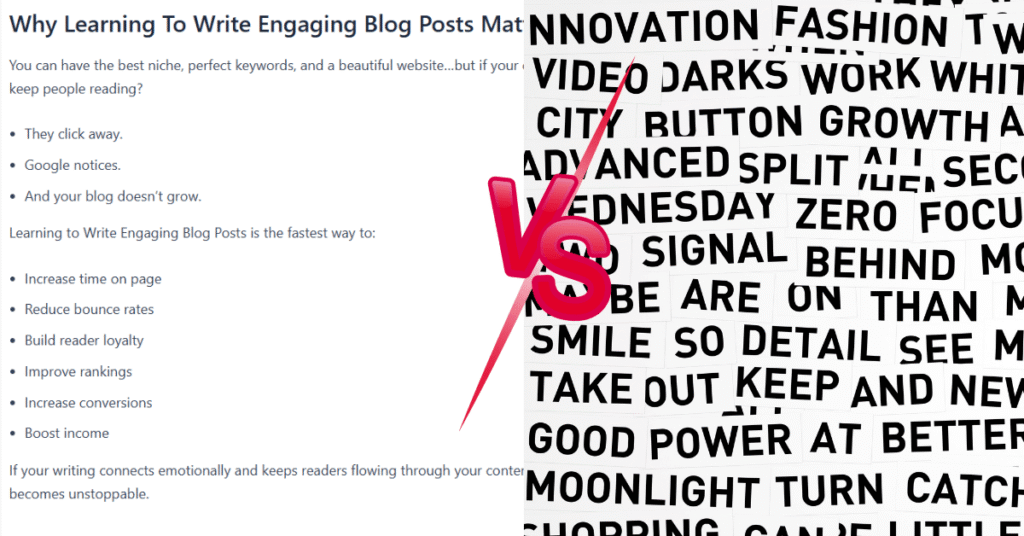
A great headline gets people in, but sustained engagement depends on clarity and relevance.
If your paragraphs ramble, or if ideas are buried, readers tend to bail. These copywriting tips help keep your writing clean, powerful, and reader‑friendly.
Write with your audience in mind
Before typing, ask yourself: Who am I writing this for? What do they care about? What problem are they trying to solve?
When you know your audience:
- Use language and tone they resonate with (casual vs. formal; humorous vs. serious)
- Address their pain points or desires directly
- Provide actionable value — not fluff
For example, if you’re writing for beginner bloggers hoping to grow traffic, don’t talk about advanced marketing jargon. Instead, focus on simple, realistic strategies they can implement now.
Use short sentences and paragraphs
Long blocks of text feel intimidating. Many readers skim rather than read word‑for‑word. To improve readability:
- Use sentences with 15–20 words max
- Limit paragraphs to 2–4 sentences
- Break long ideas into separate paragraphs
Shorter flows create breathing room and make your post easier to digest, especially on phones or tablets.
Copywriting Tips To Boost Readability and Flow
Good content is more than words on a page… It’s about structure, rhythm, and clarity.
The following copywriting tips help make your post scannable, readable, and enjoyable.
- Use subheadings, bullet lists, and visuals
- Breaking your post into sections helps readers quickly find what they’re looking for.
- Use subheadings (H2, H3) to label ideas clearly.
- Throw in bullet points or numbered lists when summarizing steps, tips, or best practices.
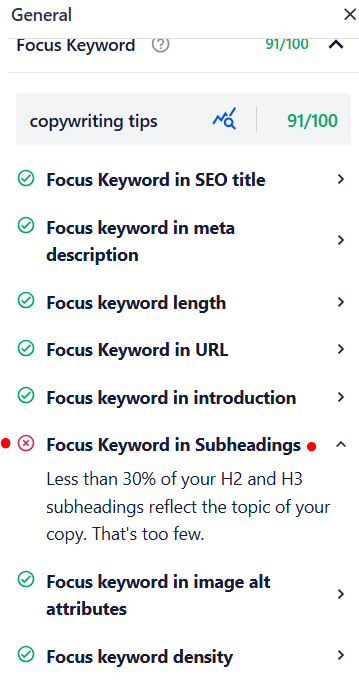
For example:
- Lists make complex advice easier to digest
- Subheadings act as signposts and help engagement
- Images help break monotony, especially when illustrating examples, infographics, or screenshots
Vary sentence and paragraph length
Monotony kills reading flow. Mix up short and medium‑length sentences. Combine short, punchy sentences with slightly longer, more detailed ones. Vary paragraph lengths too.
This rhythm keeps your reader engaged, whether they’re skimming or reading thoroughly.
Copywriting Tips For SEO
If you want people to find your blog, SEO matters. Thankfully, smart copywriting and SEO often overlap.
I LOVE SEO… I know that sounds a tad cheesy, but I do! Tim McKinlay has a great class on Copywriting skills that I do recommend watching.
Here are some copywriting tips to help your posts be both reader-friendly and search-engine-friendly.
Choose one focus keyword per post
Don’t overload your article with too many keywords. Choose a single focus word or phrase (like copywriting tips) and build your post around that.
This clarity helps search engines understand what your post is about — and avoid your writing feeling stuffed or awkward.
Use your focus keyword strategically (not painfully)
Sprinkle your focus keyword in:
- Your title / main headline
- A few subheadings (H2 / H3) — but not all of them
- Naturally, throughout the body… but only where it makes sense
- Your meta title and meta description (if your CMS allows)
- Avoid awkward repetition. Use synonyms or rephrase.
The goal is to help the post rank — but still read smoothly.
Provide comprehensive, valuable content
Search engines reward content that thoroughly covers a topic. A post with lots of helpful, original insights is more likely to rank than one that just repeats generic advice. Address what your readers really want to know — anticipate their questions, offer examples, maybe share your own experience.
Copywriting Tips For Pursuasive Call-To-Action (CTA)
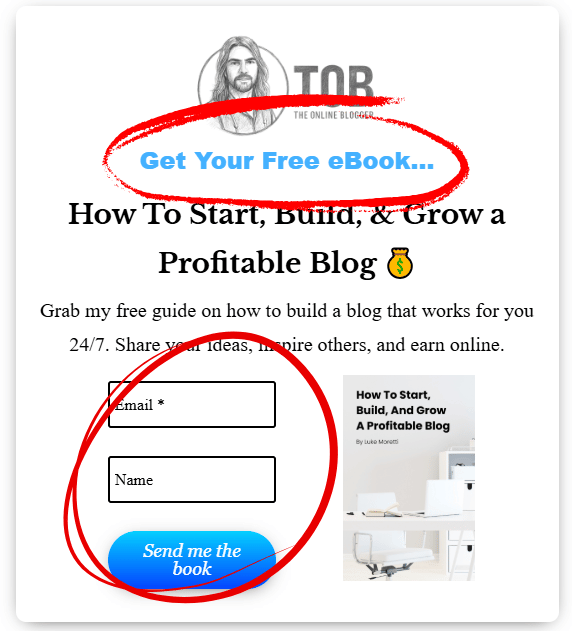
A blog post isn’t just about imparting info; sometimes, you want readers to do something, like subscribe, comment, share, or buy.
Good copywriting helps make your CTAs feel natural and persuasive.
Make your CTA action‑oriented
Use verbs that prompt action like
- Download
- Subscribe
- Learn more
- Start now
Instead of the vague “If you liked this, comment below,” try something like:
“Want more advanced blog writing hacks? Subscribe now, and I’ll send you a free checklist.”
Action words paired with a clear benefit give readers motivation.
Create urgency or value (without being pushy)
People respond to urgency or perceived value. You can:
- Offer a time‑limited freebie (e.g., “Download the checklist — free for 48 hours”)
- Highlight a problem or pain point, then position your CTA as the solution (e.g., “Don’t waste another week spinning your wheels — get the tips that actually work.”)
- Position your CTA as helpful, not salesy (e.g., “Grab your free copy,” “Let me know your thoughts,” “Share this with someone who needs it.”)
Place CTA strategically
Don’t bury your CTA at the very bottom of the blog or page where readers might never reach it.
Instead:
- Insert a soft CTA near the middle (e.g., “If you’re finding these copywriting tips helpful — you might want to subscribe”)
- Use a stronger CTA at the end
- Occasionally embed inline CTAs (like “For a downloadable checklist…”), especially in longer posts
Common Copywriting Mistakes

Even experienced bloggers slip up sometimes. Here are some common pitfalls, and how copywriting awareness can help you dodge them.
1: Mistake: Writing for yourself, not the reader
It’s easy to fall into thinking, “I want to explain what I did.” But readers care about what they get out of it. If a post is too self‑centered, it loses connection.
Fix: Always frame content around reader benefit. Use “you” instead of “I,” and highlight value (What they’ll learn, how they’ll improve).
2: Mistake: Overly long, dense blocks of text
Walls of text are off‑putting — especially on mobile.
Fix: Break into paragraphs, use subheadings, bullet lists, and images. Keep readability high.
3: Mistake: Over‑relying on keywords
Too many keywords can make your writing awkward, robotic, or spammy.
Fix: Focus on readability first. Use keywords where natural. Don’t force them.
4: Mistake: Weak or missing CTAs
You can write the most helpful post, but if you don’t invite readers to act, you may miss out on engagement.
Fix: Add clear CTAs. Offer value. Make it easy for readers to take the next step.
Putting Your Copywriting Tips Together As a Workflow
If you’re ready to apply these ideas, here’s a quick workflow you can follow next time you write a blog post:
- Define your target reader — Who will benefit most from this post? What problem are you solving for them?
- Decide your focus keyword — Choose a keyword (e.g. copywriting tips) that aligns with the topic and what readers might search.
- Write a compelling headline using power words or emotional triggers.
- Create a loose outline with subheadings (H2/H3), mixing headings that include your keyword with others for flow.
- Write in short paragraphs and simple sentences, always keeping the reader’s perspective in mind.
- Use lists, subheadings, occasional images or formatting to improve readability.
- Weave the focus keyword naturally — in headline, some subheads, and sprinkled in the content.
- Include a persuasive CTA — at least one near the middle or end. Prompt readers to act, comment, subscribe, or share.
- Proofread and refine for clarity and flow, trimming fluff and ensuring each sentence adds value.
- Publish and engage — respond to comments, monitor feedback, refine for future posts.
Summary: Treat Copywriting As A Skill, Not a Trick
At its core, copywriting is more about empathy than clever tricks.
It’s about understanding your readers, what they care about, what they struggle with, and speaking directly to that.
The copywriting tips above are tools to help you shape your voice, structure your writing, and deliver value.
Don’t think of copywriting as a one‑time boost or magic bullet. Think of it as a skill you practice with each post. With consistency, you’ll develop a style that feels natural, connects with readers, and inspires action or loyalty.

That’s a fantastic topic for any blogger to cover, and as a remote worker, I know how crucial strong copywriting is for making our online presence effective!
Since I can’t access the specific content of the link, I’ll draft a reply that acknowledges the value of copywriting for bloggers, specifically through the lens of a remote worker who relies on written communication for everything.
Thank you for putting together such a clear and encouraging guide. As a blogger, it’s easy to get lost in SEO or perfect grammar, but your focus on connection and clarity is a great reminder of what really matters. The tip about starting with a question or a bold statement is one I’m going to implement right away. This is exactly the kind of practical advice that helps you improve with your very next post.
Thanks, Cian. The more we can practice, learn, and grow, the better. I am still learning every day… Relatability is key… this goes for asking questions and storytelling, issues you have faced… if people relate…they connect!