
Before we get into templates, tips, and advanced tricks, you need to understand the core foundations that make content engaging.
These principles apply to ANY niche, topic, or interest. If you can relate to your readers, they will relate to you.
First…
1. Understand Your Reader’s Intent
The quickest way to lose a reader is to forget what they came for. Stay on or very close to the topic at hand, and I find that it helps to ask yourself these questions…
To Write Engaging Blog Posts, always ask:
- What problem are they trying to solve?
- What emotion are they feeling?
- What outcome do they want?
- What don’t they know yet?
When you understand the reader, you write to them, not at them.
Pro Tip: People don’t care about your writing. They care about how your writing helps them.
2. Make Your Opening Paragraph Irresistible
Your intro decides whether your visitors stay or leave. Statistics show that we have approximately 3 – 8 seconds to engage the reader, and make them want to stay, otherwise, they are on to the next website to find what it is they are looking for.
An irresistible intro should:
- Speak directly to their problem or dream
- Show them you understand
- Promise a clear solution
- Use simple language
- Avoid fluff
Example opening style:
“Ever wondered why some blog posts pull you in while others put you to sleep? Today, I’ll show you how to write content your readers can’t walk away from…”
Your intro is your handshake; make it strong, friendly, and purposeful.
3. Keep Paragraphs Short & Skimmable
Online readers don’t read… they scan.
If you want to write engaging blog posts, your layout matters.
You will want to use:
- Short paragraphs
- Bullet points
- Sub-headings
- White space
- Simple sentences
This makes your blog “breathable” and easy to digest.
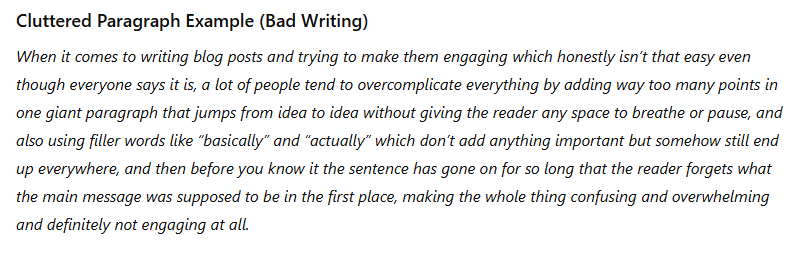
Pro Tip: If your formatting is heavy, readers leave. If it’s light and clean, they stay.

Now let’s get more practical… here’s how to instantly improve your writing and keep your readers even more engaged.
There really is no secret to this one, as people have been doing it for centuries, and that is…telling their stories.
Something very special happens when people open up and express themselves and their relatable stories… It builds a sense of trust…
1. Tell Stories (Even Small Ones)
- People connect with stories.
- They remember stories.
- They trust stories.
You don’t need a dramatic life event… even a simple personal example connects your writing to reality.
Example: “Last week, I tried the best affiliate marketing training platform, and I’m finally having success…”
When you share stories, readers see themselves in your words.
Key Takeaway: Stories make your blog human. Humans love humans.
2. Add Emotion + Curiosity
Two things keep people reading: How they feel and what they do next.
Use curiosity-driven transitions like:
- “Here’s where most people go wrong…”
- “But there’s a twist…”
- “The part nobody talks about is…”
- “Here’s the secret…”
Your blog instantly becomes more engaging.
Key Takeaway: If readers feel something, they keep going.
3. Use Examples Your Audience Relates To
The best way to Write Engaging Blog Posts is to speak the reader’s language.
For example, if you were talking to a person who has diplomas and degrees in nuclear biochemistry, you would speak differently to them than you would to a 16-year-old skateboarder… Use language that your niche audience would use.
- For a parenting niche → use parenting examples
- For fitness → use gym analogies
- For personal finance → use relatable money struggles
Examples bring information to life; your readers should think: “This is SO me.”
4. Teach Something Clear & Useful
Engaging = helpful.
Not fluffy.
Not vague.
Not repetitive.
Give people actionable steps like:
- Try this template
- Follow this 3-step method
- Avoid this mistake
- Use this wording
- Copy this example
Readers LOVE blogs they can implement immediately.
Pro Tip: The more “aha moments” your content gives, the more memorable it becomes.
5. Write Like You Talk
The #1 easiest way to create engaging content?
Stop writing like a textbook.
Write like you’re having a conversation with a real person sitting right in front of you.
Use words like:
- “You”
- “I”
- “Let’s do this together.”
Relatable phrases that people can connect with.
A friendly tone (Luke style  )
)
This is how you build real connections with people through your blogs.
Words of advice: If you wouldn’t say it out loud, don’t write it.

I want you to write a full SEO-optimized blog in my personal writing style — friendly, engaging, conversational, and easy to read.
Follow ALL rules below to ensure the blog ranks well AND keeps readers engaged from start to finish:
 ENGAGEMENT RULES (MUST FOLLOW)
- Use short paragraphs, simple sentences, and clean, easy-to-skim formatting.
- Write in a friendly, personal, helpful tone — like you’re talking directly to the reader.
- Start with a strong attention-grabbing intro that mentions the focus keyword and speaks to the reader’s problem or desire.
- Use storytelling wherever appropriate (even small personal anecdotes).
- Add curiosity-driven transitions
- “Here’s where most people go wrong…”
- “But there’s something most people overlook…”
- “Let me show you the part nobody talks about…”
- Use plenty of sub-headings, bullet points, numbered lists, and white space.
- Include actionable steps the reader can follow immediately.
- Use relatable examples tied to the topic or niche.
- Add emotional connection — write like you talk, not like a textbook.
- Finish each H2 section with a short mini-summary or closing thought.
- End the blog with a positive, inspiring, helpful conclusion that encourages the reader.
- Make the writing skimmable and visually light.
SEO RULES (NON-NEGOTIABLE)
- The focus keyword must appear in:
- The Title (H1)
- The opening paragraph
- At least 30% of all H2 and H3 headings
- Naturally, throughout the blog content
The blog structure must include:
- H1 Title (with keyword)
- Engaging intro paragraph (with keyword)
- H2 sections (include keyword in at least 30%)
- H3 subsections (include keyword in at least 30%)
- Bulleted lists and numbered lists
- Helpful examples, tips, and explanations
- Conclusion paragraph
- Optional TL;DR summary if helpful
Use semantic keyword variations naturally (e.g., “write engaging content,” “reader engagement,” “blog writing tips,” etc.).
The writing must flow naturally — no keyword stuffing.
FINAL INSTRUCTIONS
At the end, include a short TL;DR and format it as either a bulleted or short-paragraph summary.
YOUR INPUTS
The blog topic is: [INSERT BLOG TOPIC/TITLE HERE]
The focus keyword is: [INSERT FOCUS KEYWORD HERE]
Now write the blog using the full rules above.