Keyword research is the foundation of every blog post that ranks, gets traffic, and actually brings in results, and yet this is the part most people rush, guess, or completely overcomplicate.
In this tutorial, I’m going to show you how I do keyword research with 100% accuracy using a simple, repeatable process that removes guesswork and focuses on real competition, real intent, and real rankings.
If you can follow basic steps, you can do proper keyword research.
Let’s get into it.
What Keyword Research Actually Means (In Plain English)
Keyword research is simply the process of:
- Finding out what keywords people are searching for.
- Checking how competitive these keywords are.
- Deciding whether you can realistically rank for it.
- Creating better content than what already exists.
That’s it.
🏆 Pro Tip: Good keyword research isn’t just about finding popular keywords. It’s about finding keywords you can rank for.
And that’s where most bloggers go wrong…
How To Do Keyword Research Step-by-Step
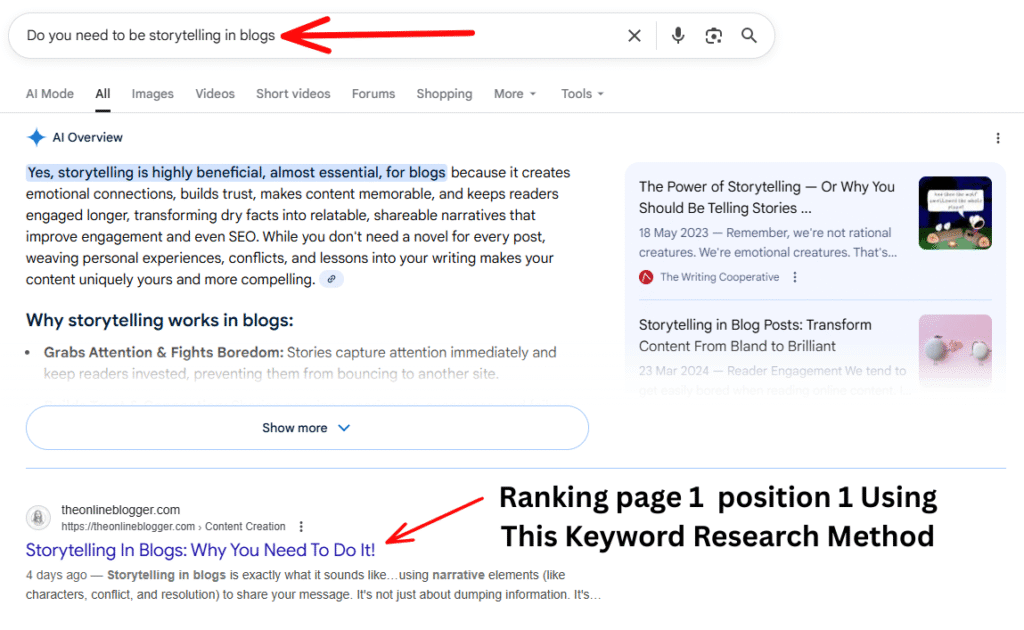
In my years online, understanding and learning the method of writing blogs that rank in search engines, hopefully on page 1, position 1, 2, or 3, is not just something that happens.
It has taken years of trial and error with research and blogging and now you can learn in it one single blog… “This one!”
Yes… There are a few steps to cover, but the main one is…do your keyword research and write helpful content.
Here we go…
Step 1: Start Your Keyword Research With Jaaxy
The first tool I use for keyword research is Jaaxy.
There are many other keyword research tools online; however, Jaaxy has not let me down yet, and I have no need to look elsewhere… my blogs rank… what more proof do I need right!
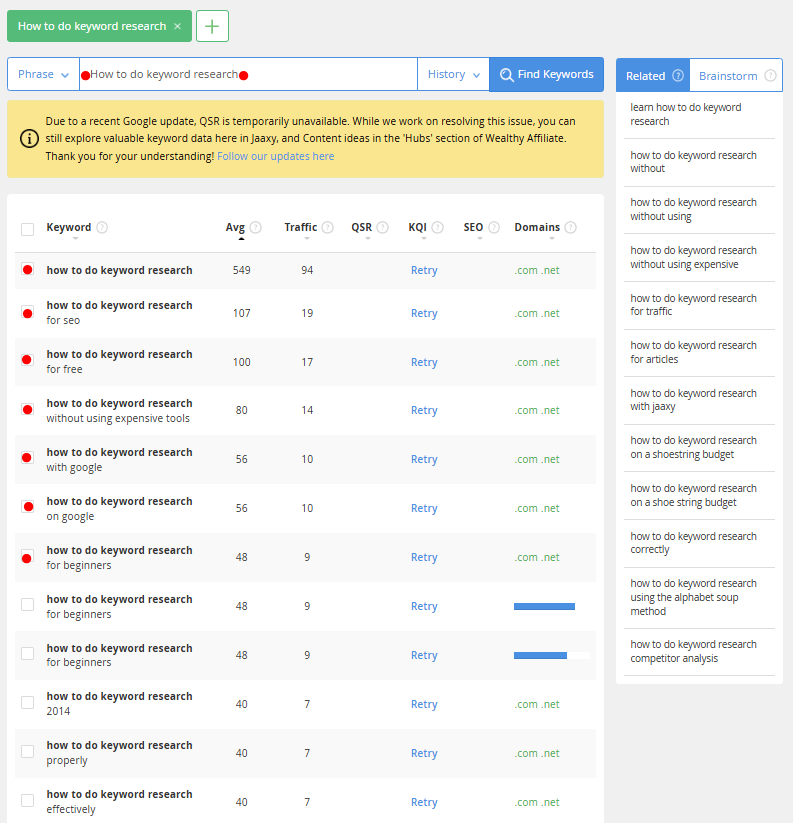
Jaaxy keyword research tool is fast, beginner-friendly, and gives you instant insight into:
- Search volume – The average amount of search volume for your keyword and other related keywords.
- Related keyword – Get other related keyword phrases, giving you endless keyword paths and ideas to go down.
- Traffic potential – If you land your blog on page 1 of Google search for that keyword, you will see the average amount of traffic you will receive to your website.
- Keyword ranking potential – Your chances of ranking for that specific keyword.
- Domain name availability – See which keywords are available for domain name purchase.
How To Use Jaaxy
Step1: Go to Jaaxy.com and make a free account…or… get Jaaxy through Wealthy Affiliate ( Wealthy Affiliate includes Jaaxy, and blogging/affiliate marketing training, with AI tools as well)
Step 2: Enter a broad topic or idea in the search box. Ideally, you already have a list of identified keywords highly related to your niche… You will get a limited number of searches with the free Jaaxy membership, so think about your keywords before you search.
Step 3: Analyse your data and identify the keywords with high search volume. Make a note of these keywords. Run a few keyword ideas to get a list of potential keywords to use in your blogs.
Example of keywords:
- How to do keyword research
- how to carve wood
- best small lawn mowers
- fingernail art
Look for keywords that have:
- Normality – Make sure the keywords sound normal and sound like you would say them.
For example, “Mow lawn small lawn mower.” is not the same as “How to mow lawns with a small lawn mower.”
- Clear search intent – Straight to the point is best… There is a huge difference in “guitars” and “Buy Fender Guitar”
- Enough traffic to be worth writing about – Depending on your niche, one person a day that converts into a sale can bring in thousands… others need thousands of people to make a few hundred… In any case… the higher the better.
I’m not chasing massive numbers here. I’m looking for keywords I can realistically rank for, especially as a newer or growing blog.
This is where keyword research starts to become strategic instead of hopeful.
 Tip: Don’t overthink Jaaxy numbers. They’re a filter, not the final decision.
Which brings us to the most important step…
Step 2: Use Google Quotation Marks Exact-Match Search
This is where most people don’t go, and it’s the reason they struggle to rank.
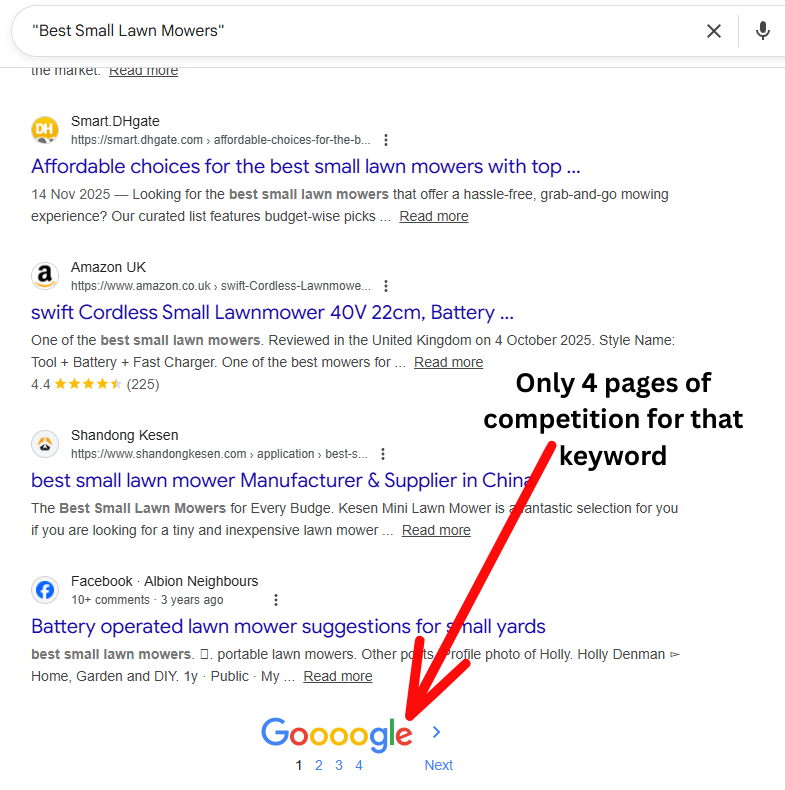
Once I find a keyword in Jaaxy, I take that exact keyword and put it into Google search, but inside quotation marks.
For example:
- “keyword research”
- “how to carve wood.”
- “best small lawn mowers”
- “fingernail art”
Why This Step Is So Powerful
Using quotation marks tells Google:
“Show me pages that are targeting THIS exact phrase.”
What you’re really checking here is:
- How many pages are actually competing for this keyword.
- Whether big authority sites dominate the results.
- If the competition is thin or weak.
If Google only shows:
- A few pages
- Forums
- Small blogs
- Outdated content
That’s a green light for your keyword research.
This step alone eliminates guesswork and gives you real-world accuracy. Once you know your competition for each keyword, it is easy to wiggle your way in for traffic.
Step 3: Analyze The Top Ranking Competition
Now that you’ve confirmed low competition, it’s time to study what blogs and websites are already ranking.
Click into the top 3–5 results and ask yourself:
- What questions are they answering?
- How detailed is the content?
- Is it outdated or shallow?
- Are they missing anything obvious?
This part of keyword research is not about copying; it’s about understanding search intent.
You’re learning:
- What the reader expects
- What Google already rewards
- Where you can improve the blog
- Approximately how long your blog will need to be
I know this part can be strenuous and tedious to get through, but I assure you it is well worth it.
In a world where millions are trying their luck to write blogs that rank, guesswork will just not cut it anymore… you need to follow a clear method like the one I have shared here today.
Step 4: Write Your Blog With One Goal In Mind
This is where keyword research turns into rankings.
Well… kind of. There is a lot to do before then…
Your mission is simple… To create a better piece of content than what already exists.
That can mean:
- More clarity
- Better structure
- Step-by-step explanations
- Real examples
- A friendlier tone
- Updated information
🚀Pro Tip: You don’t always need to write more words. Sometimes, you just need to write better content.
This is how smart keyword research pays off.
Step 5: Pre-check Your Keyword Research With All-In-One SEO Plugin
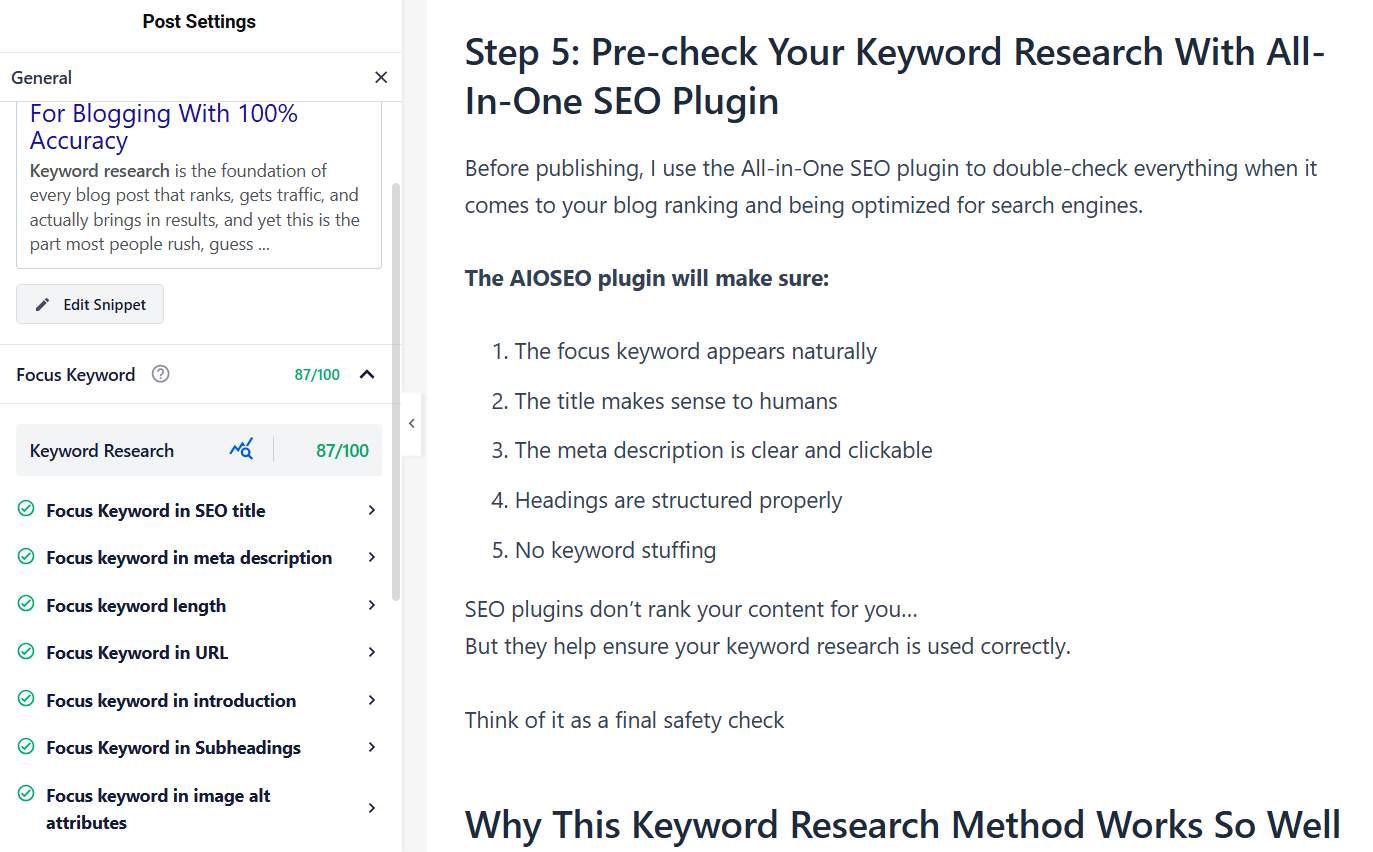
Before publishing, I use the All-in-One SEO plugin to double-check everything when it comes to your blog ranking and being optimized for search engines.
The AIOSEO plugin will make sure:
- The focus keyword appears naturally
- The title makes sense to humans
- The meta description is clear and clickable
- Headings are structured properly
- No keyword stuffing
SEO plugins don’t rank your content for you…
But they help ensure your keyword research is used correctly.
Think of it as a final safety check
Why This Keyword Research Method Works So Well
This method of keyword research is effective because it incorporates several additional aspects that people often overlook, but Google does consider.
- A keyword tool (Jaaxy)
- Real Google competition data
- Manual analysis
- Intent-focused writing
- On-page SEO checks
Most people only do one of these steps…You’re doing all of them.
That’s why this approach gives you accuracy, not guesses and is more effective than posting random posts with no groudwork put in.
Common Keyword Research Mistakes To Avoid
Before you go, there are a few traps I see many get trapt in.
For best results, avoid these traps:
❌ Choosing keywords just because they have high traffic
❌ Ignoring Google search results
❌ Writing content without checking competition
❌ Keyword stuffing instead of helping the reader
❌ Skipping intent analysis
Keyword research is about strategy, not shortcuts.
My Conclusion To Keyword Research For Blogging
When done properly, keyword research removes:
- Confusion
- Wasted effort
- Random content creation
You stop hoping for traffic…and start planning for it.
If you can master this process, you’ll never struggle to find blog topics or rank content again.
And the best part?
This keyword research method works in any niche!
If you have any questions regarding keyword research or keyword research tools, please leave them in the comments section below or reach out to me within my Facebook group.