
In today’s guide, I’m going to break down the difference between affiliate marketing and MLM in simple terms so that by the end, you’ll know exactly what the difference is between the two.
Affiliate marketing and MLM are thrown around like they mean the same thing.
Spoiler alert: they don’t.
While both models involve promoting products and earning commissions, the structure, risk level, earning potential, and overall experience are completely different.
Here we go!
What Is Affiliate Marketing?
Before we compare affiliate marketing and MLM, we need to understand how each one works.
Affiliate marketing is a business model where you promote someone else’s product or service and earn a commission when someone buys through your unique link.
That’s it.
- You don’t create the product.
- You don’t deal with customer service.
- You don’t ship anything.
You simply connect buyers to sellers and get paid for the referral.
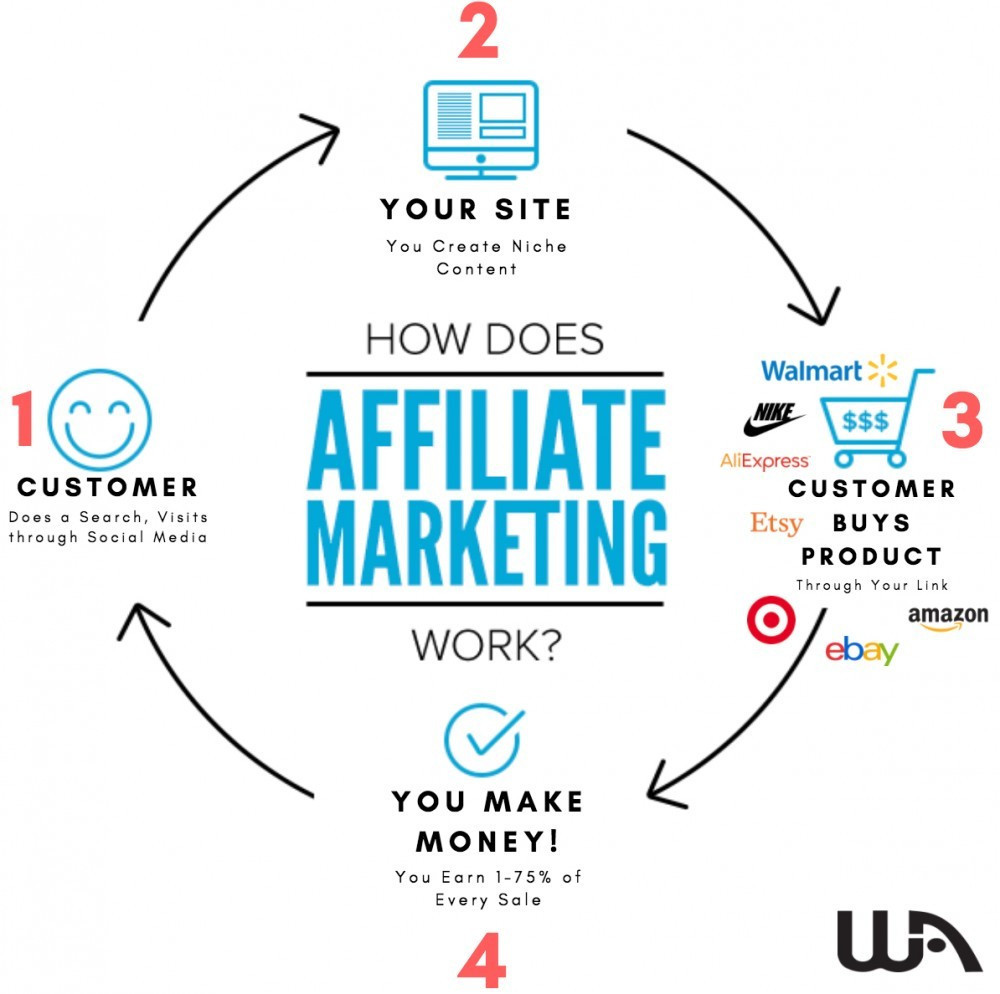
How Affiliate Marketing Works
Here’s the basic process:
- Choose a passion, hobby, or interest
- Join an affiliate program that aligns with your niche.
- You receive a unique tracking link.
- You promote the product via (blog, YouTube, email, social media).
- Someone clicks your link and makes a purchase.
- You earn a commission.
Pretty simple, right?
You’ll see affiliate programs everywhere. Companies like Amazon, Shopify, and ClickBank all offer affiliate partnerships.
The beauty of affiliate marketing is that you can promote almost anything, including software, physical products, courses, or subscriptions.
Read Full Blog: What Is Affiliate Marketing?
What Is MLM?

Now, let’s look at the other side of affiliate marketing and MLM.
MLM stands for multi-level marketing. It’s also known as network marketing.
In an MLM structure, you earn money in two ways:
- Selling products directly.
- Recruiting others into the business.
When you recruit people, they become part of your “downline.” You then earn a percentage of their sales as well.
Popular MLM companies include:
- Amway
- Herbalife
- Avon
Unlike affiliate marketing, MLM usually requires you to:
- Buy a starter kit
- Maintain monthly product purchases
- Attend training events
- Recruit consistently to scale income
And this is where things start to look very different between affiliate marketing and MLM
The Main Difference Between Affiliate Marketing And MLM

In this section I will note the main differences between affiliate marketing and MLM…
1. Difference In Structure
Affiliate Marketing:
You earn commissions from your direct referrals only. No downline. No team building required.
MLM:
You earn from personal sales AND from the people you recruit. The structure is tiered.
This is the biggest structural difference in affiliate marketing and MLM.
2. Startup Costs
Affiliate marketing often has:
- Low startup cost
- Free program signups
- Optional website hosting fees
MLM usually involves:
- Starter kits ($50–$500+)
- Monthly minimum purchases
- Event and training costs
If you’re comparing affiliate marketing and MLM, the financial risk is typically much lower with affiliate marketing.
3. Income Potential
Here’s where things get interesting.
In affiliate marketing:
- Your income depends on traffic and conversions.
- There is no income cap.
- You don’t need to recruit anyone.
In MLM:
- Income often depends heavily on recruiting.
- Compensation plans can be complex.
- A small percentage of participants earn most of the money.
Pro Fact: Studies and income disclosures from many MLM companies show that a large percentage of participants earn little to no profit after expenses.
4. Product Flexibility
With affiliate marketing:
- You can promote multiple companies.
- You’re not tied to one brand.
- You can pivot niches anytime.
With MLM:
- You represent one company.
- Promoting competitors is usually prohibited.
- Leaving often means losing your downline.
This flexibility gives affiliate marketing a big advantage when comparing affiliate marketing and MLM.
Is MLM The Same As A Pyramid Scheme?

This question always comes up in conversations about affiliate marketing and MLM.
Here’s the deal:
- Pyramid schemes are illegal.
- MLMs are legal (but controversial).
- The difference lies in whether real products are being sold.
That said, some MLM structures resemble pyramid-style compensation models because recruitment plays such a heavy role in income growth.
Affiliate marketing, on the other hand, is strictly performance-based. No recruiting. No levels. Just commissions for sales.
Pros And Cons Of Affiliate Marketing And MLM
Just like all business models, there are both pros and cons to every one. In this section I will point out the main pros and cons to affiliate marketing and MLM.
Pros of Affiliate Marketing
- Low risk
- No inventory
- No recruiting
- Scalable with content
- Passive income potential
Cons of Affiliate Marketing
- Takes time to build traffic
- Requires marketing skills
- Income isn’t instant
Pros of MLM
- Built-in community
- Structured training
- Potential for team leverage
Cons of MLM
- Recruitment pressure
- Monthly purchase requirements
- Higher upfront costs
- Social relationship strain
Pro Tip: When evaluating affiliate marketing and MLM, your personality matters. Some people enjoy networking and team building. Others prefer independent, content-based marketing.
My Final Thought On Affiliate Marketing And MLM
Both affiliate marketing and MLM are commission-based business models.
But that’s where the similarities mostly end.
Affiliate marketing focuses on:
- Direct referrals
- Performance-based income
- Digital scalability
MLM focuses on:
- Recruitment
- Team building
- Tiered compensation structures
If your goal is building an online income stream with minimal risk and maximum flexibility, affiliate marketing is usually the better starting point.
If you prefer face-to-face sales and structured organizations, MLM might feel more natural… just be sure to review income disclosures and understand the costs involved, and keep in mind… MLM is closely related to pyramid schemes, so it often has a bad reputation.
At the end of the day, the biggest difference between affiliate marketing and MLM comes down to control, risk, and recruitment.
Choose wisely.

 Check Out My Top 2 Make Money Online Training Platforms... I am still a member of both platforms today!