If you’re promoting products and earning a commission when someone clicks your link or makes a purchase, then you absolutely need an affiliate disclosure page.
Let’s break down why it’s essential, what it should include, and because I like to make life easier… a free affiliate disclosure example you can plug into your website right away.
First Of All What Exactly Is An Affiliate Disclosure Page?
Before we get into why you need an affiliate disclosure page, let’s clear up what it even is.
An affiliate disclosure page is a notice on your website (or social media account) that clearly tells visitors you’re earning a commission when they click on or buy through your affiliate links.
It’s all about transparency and building trust.
Basically, it’s like saying:
“Hey, I may make money if you buy through my links, but I only recommend products I truly believe in.”
Sounds fair, right?
Why You Need An Affiliate Disclosure Page
Now to the big question… why do you even need an affiliate disclosure page?
Here’s a quick rundown of the most important reasons:
1. It’s the Law (Seriously)
Both the Federal Trade Commission (FTC) in the U.S. and advertising authorities in many other countries require affiliate marketers to disclose their relationships with brands.
If you don’t follow these rules, you’re not just breaking the law; you’re risking fines, takedown notices, and even legal action.
2. It Builds Trust with Your Audience
People are way more likely to trust you and your product recommendations when you’re upfront and honest about making commissions.
Being shady or secretive? That’s the fastest way to lose followers.
3. Google Cares About Transparency Too
Yup, even Google has jumped on the honesty train. Not having a clear disclosure can impact your SEO, rankings, and even ad approval if you’re using Google Ads.
So, if you’re building a blog or niche website, another reason you need an affiliate disclosure page is that it can help protect your site’s visibility.
Where You Should Put Your Affiliate Disclosure Page or Statement?
It’s not just about having a disclosure; it’s about putting it in the right places. You want to make it easy for readers to find, not buried deep in your website’s footer.
Here’s where to include it:
- On a dedicated Affiliate Disclosure Page (linked from your menu or footer)
- At the top of blog posts that contain affiliate links
- In YouTube video descriptions, if you’re promoting products, there
- On social media posts, like Instagram or TikTok, using terms like “#ad” or “#affiliate”
- And yes, even on your email newsletters, if you’re promoting affiliate products through them.
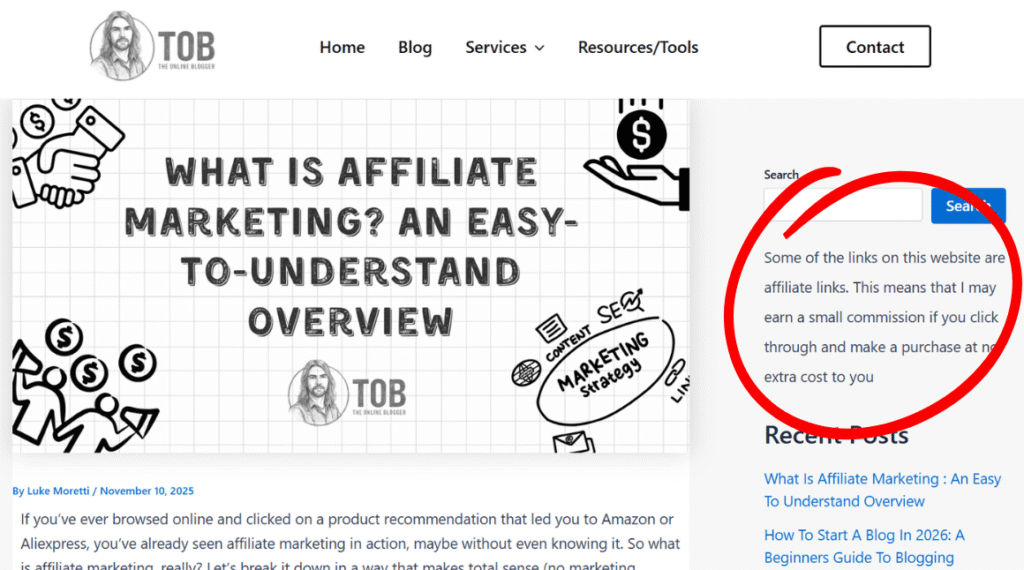
Pro Tip: I have my affiliate disclosure situated in the sidebar of my blog pages. This way I know all blogs will have an affiliate disclosure in the future, regardless of whether or not they have affiliate links inside the blog or not.
What Should Be Included In An Affiliate Disclosure Page
Let’s break it down. If you’re setting this up yourself, here’s what to include:
- A clear statement that you earn money from affiliate links
- A short explanation of what affiliate links are
- Reassurance that you only promote products you genuinely recommend
- Mention of any specific affiliate programs (like Amazon Associates or ShareASale)
- Language that’s easy to understand.
If you feel there is more you would like to add in your websites affiliate disclosure page or statement, by all means do so. I’m here to cover the foundational basics that will get you through.
Specific affiliate disclosures may be written up if a company requires it in their affiliate program contract, which you will read and sign when requesting to join the affiliate program.
Here's a Quick Checklist For Your Affiliate Disclosure Page
Here’s a Quick Checklist for Your Affiliate Disclosure Page:
- Clearly states your affiliate relationship
- Easy to find and access
- Written in plain language
- Includes program names if applicable
- Linked in your website’s footer or main menu
If you check all those boxes, chances are you’re in good shape and you are ready for affiliate links and hopefully some commissions.
Free Example: Affiliate Disclosure Page Template
You came here for a free affiliate disclosure page example, and I’ve got your back. Feel free to copy, tweak, and paste this onto your own website:
Affiliate Disclosure
Some of the links on this website are affiliate links. This means that I may earn a small commission if you click through and make a purchase, at no extra cost to you.
I only promote products and services that I truly believe will bring value to my readers. Any recommendations I make are based on my personal experience or thorough research.
This site is also a participant in affiliate programs like [Insert programs — e.g., Amazon Services LLC Associates Program], which is designed to provide a means for sites to earn advertising fees by advertising and linking to [Amazon.com or other websites].
Thank you for supporting the content I create!
There We Go! Simple, Clean, and Honest.
My Final Thoughts
At the end of the day, if you’re serious about affiliate marketing, then you need an affiliate disclosure page. It protects you legally, builds trust with your audience, and keeps you in good standing with platforms like Google, Amazon, and YouTube.
And the best part? It only takes a few minutes to set up.
So if you haven’t done it already, now’s the time. Use the free example above, make a few edits, and boom, you’re compliant, transparent, and one step closer to affiliate success.